
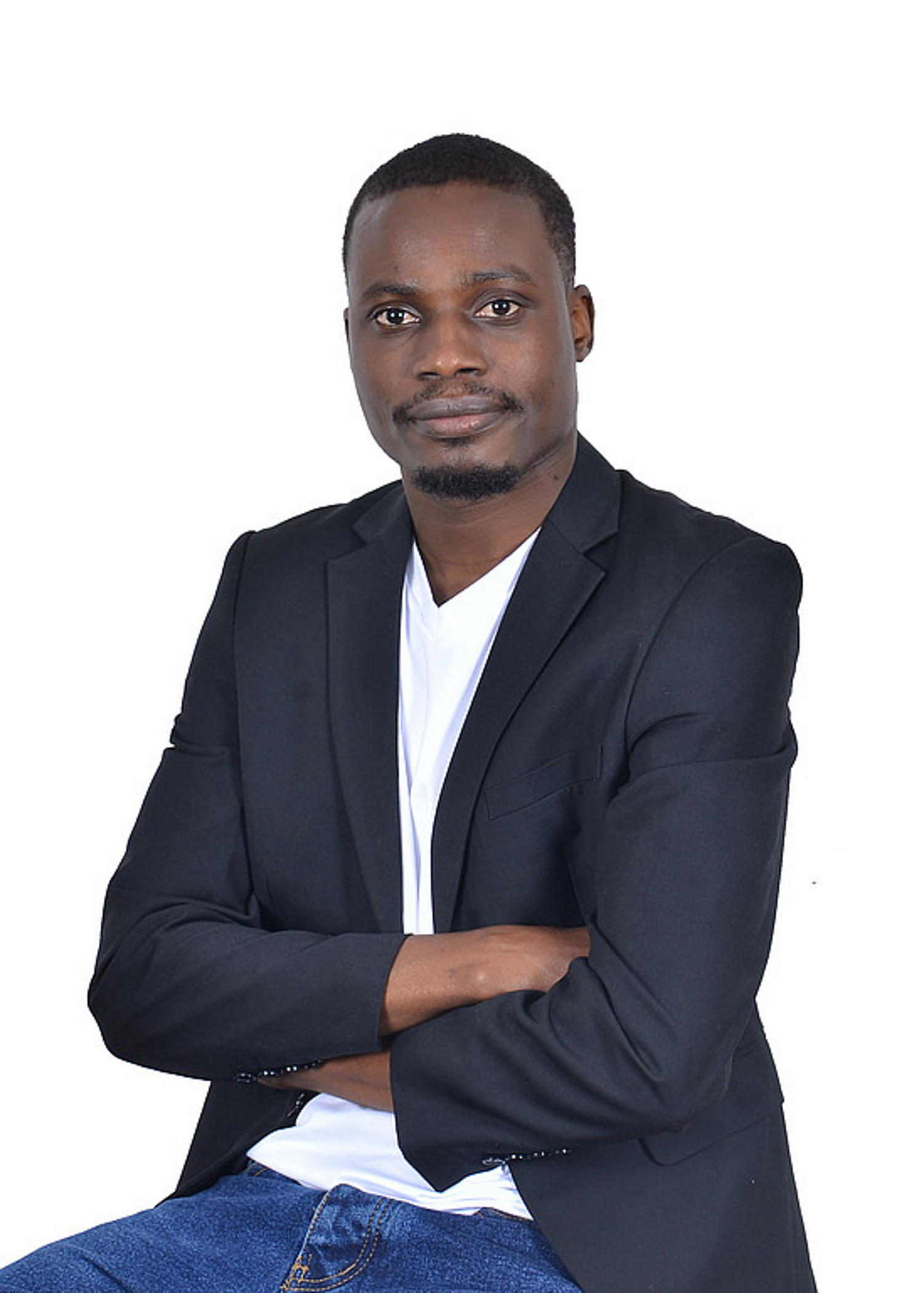
Batbaina Guikoura
PhD Candidate at University Mohammed VI Polytechnic (UM6P), Morocco
Batbaina is a doctoral candidate in robotics and artificial intelligence at the College of Computing, University Mohammed VI Polytechnic (UM6P), Morocco. His interdisciplinary research explores how intelligent autonomous systems can contribute to environmental data collection.
His doctoral work focuses on developing intelligent coordination and planning strategies for heterogeneous multi-robot systems, including teams of unmanned ground vehicles (UGVs) and unmanned aerial vehicles (UAVs). By combining optimization, artificial intelligence, and autonomous robotics, he aims to enable robotic systems to collaboratively perform environmental data collection tasks while improving energy efficiency, operational performance, and communication reliability. While precision agriculture represents a significant application of his research, these scientific contributions have broader potential applications in environmental monitoring and sustainable resource management.
Before beginning his doctoral studies, Batbaina earned a master's degree in industrial mathematics (specializing in data science) from the African Institute for Mathematical Sciences (AIMS) in Cameroon, supported by a Mastercard Foundation scholarship. He also holds a master's degree in computer science and a bachelor's degree in computer science and mathematics from the University of Ngaoundéré, Cameroon. In addition to his academic research, Batbaina has gained professional experience applying digital technologies to real-world problems. At the International Fund for Agricultural Development (IFAD), he worked as an ICT systems development intern, contributing to the development of artificial intelligence solutions, automated data processing workflows, and intelligent information retrieval systems.
Convinced that digital innovation can play a transformative role in addressing environmental challenges, Batbaina aspires to develop intelligent, accessible, and resource-efficient technologies that promote sustainable development. Through his research, he strives to bridge the gap between advances in artificial intelligence and robotics and their practical deployment in environmental applications, particularly in regions where technological innovation can help address pressing environmental and resource management challenges.