
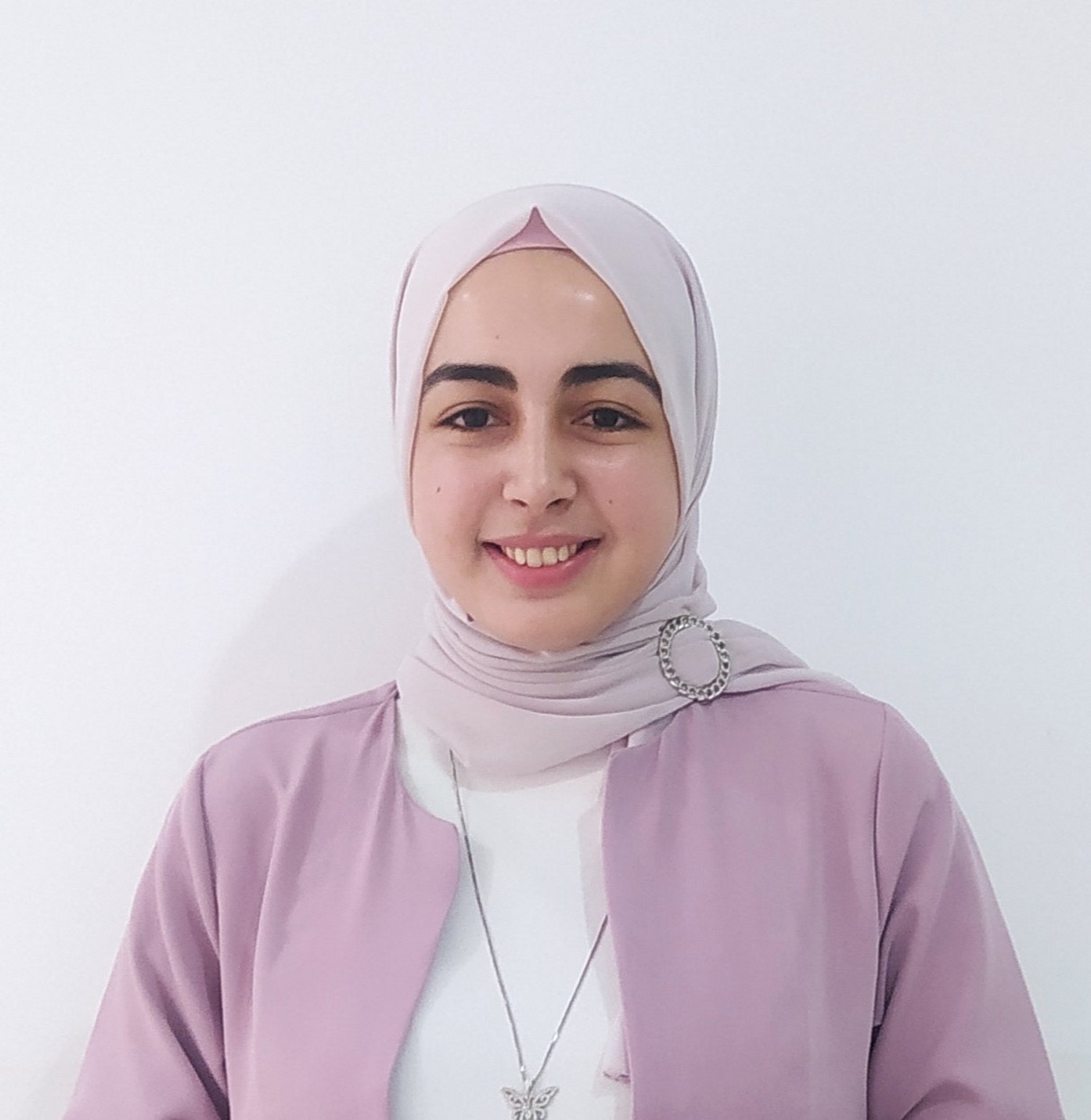
Hela Ben Abdelhafidh
First-year PhD researcher at ENET’Com, University of Sfax, Tunisia
I am a first-year PhD researcher at the National School of Electronics and Telecommunications of Sfax (ENET’Com), University of Sfax, Tunisia, working on knowledge-driven battery diagnosis based on Electrochemical Impedance Spectroscopy (EIS). My research focuses on electric vehicles and aims to improve battery diagnostics in an intelligent and interpretable way.
A battery gradually changes as it is used. Its internal electrochemical processes evolve with charging, temperature and repeated charge-discharge cycling, which can affect its available capacity and performance. My research investigates how EIS measurements, which describe the electrical response of a battery over a range of frequencies, can be used to identify these changes and estimate important battery states such as State of Charge (SoC) and State of Health (SoH). SoC indicates how much charge remains available in the battery, while SoH reflects the battery's degree of aging. Both states are influenced by degradation mechanisms that can change the battery's behavior over time.
A particular focus of my work is connecting EIS measurements to battery degradation mechanisms in order to make battery-state estimation physically consistent and accurate. To represent this knowledge in a structured way, I am developing a battery ontology that describes relevant battery concepts, degradation mechanisms and the relationships between them. The aim is to investigate how this knowledge can be integrated with AI models so that they not only predict battery states but also relate their predictions to meaningful electrochemical phenomena.
Battery diagnosis should go beyond simply predicting a battery's state, it should also provide interpretable explanations grounded in electrochemical knowledge. I aim to develop a knowledge-driven and explainable approach in which AI predictions can be evaluated and interpreted using explicitly represented battery knowledge. This neuro-symbolic approach will also be optimized for implementation in embedded Battery Management Systems (BMS), taking into account their computational and resource constraints.
Through my research, I seek to combine advances in artificial intelligence with electrochemical knowledge to develop battery diagnostic methods that are accurate, explainable and physically consistent. Ultimately, I hope to contribute to the advancement of sustainable electric mobility by improving battery diagnosis, supporting safer and more efficient battery use, enabling better degradation monitoring and potentially extending the useful lifetime of batteries.