
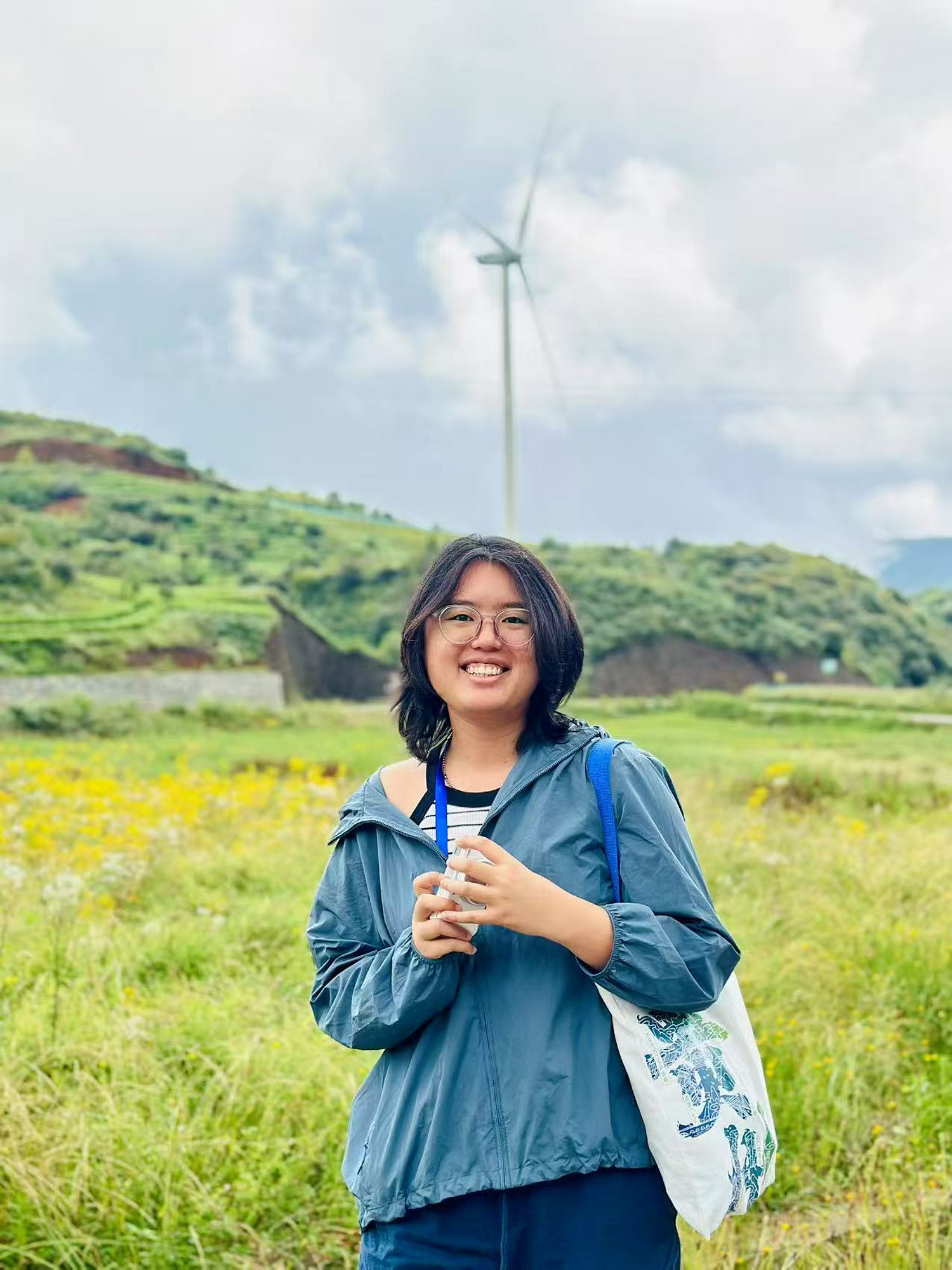
Jun Tung Lai
Pursuing dual Master’s degrees— in Environmental Science and Engineering at the University of Science and Technology of China and in Sustainable Transition at Justus Liebig University Giessen
Jun Tung Lai is currently pursuing dual Master’s degrees—in Environmental Science and Engineering at the University of Science and Technology of China and in Sustainable Transition at Justus Liebig University Giessen. She holds a B.Eng. in Civil Engineering from Universiti Sains Malaysia and previously completed a research placement under the ESEP-G program at The University of Tokyo, conducting wastewater surveillance of Antimicrobial Resistance (AMR) pathogens.
Her Master’s thesis research focuses on soil microbial ecology, investigating functional gene abundance to advance ecological resilience. Parallel to her studies, she leads Waste Mining—a digitally monitored, multi-omic bioprocessing platform. Initiated in 2022, this system transforms organic waste streams into biomineralized construction materials and recycled fertilizers, decoupling infrastructure development from raw material extraction.
Her research supports the United Nations Sustainable Development Goals, including SDG 9 (Industry, Innovation, and Infrastructure) through low-carbon building materials, SDG 11 (Sustainable Cities and Communities) via urban waste mitigation, SDG 12 (Responsible Consumption and Production) through nutrient recovery, and SDG 13 (Climate Action).
Recognized internationally, Jun Tung earned First and Second Prizes (Regional Finals) in the Stanford Doerr Global Sustainability Challenge 2026, was named Joint Winner in the COINS Grand Challenge 2022, and received the Bronze Award at the SDGs Design International Award (2024). She combines expertise across civil engineering, molecular biology, governance, and business strategy to turn biomimicry concepts into practical technologies.
As a Digital GreenTalents Awardee, Jun Tung looks forward to connecting with the German sustainability network to scale her digitally integrated bioprocessing platform and bridge molecular insights with practical ecotechnology to build climate-resilient systems.