
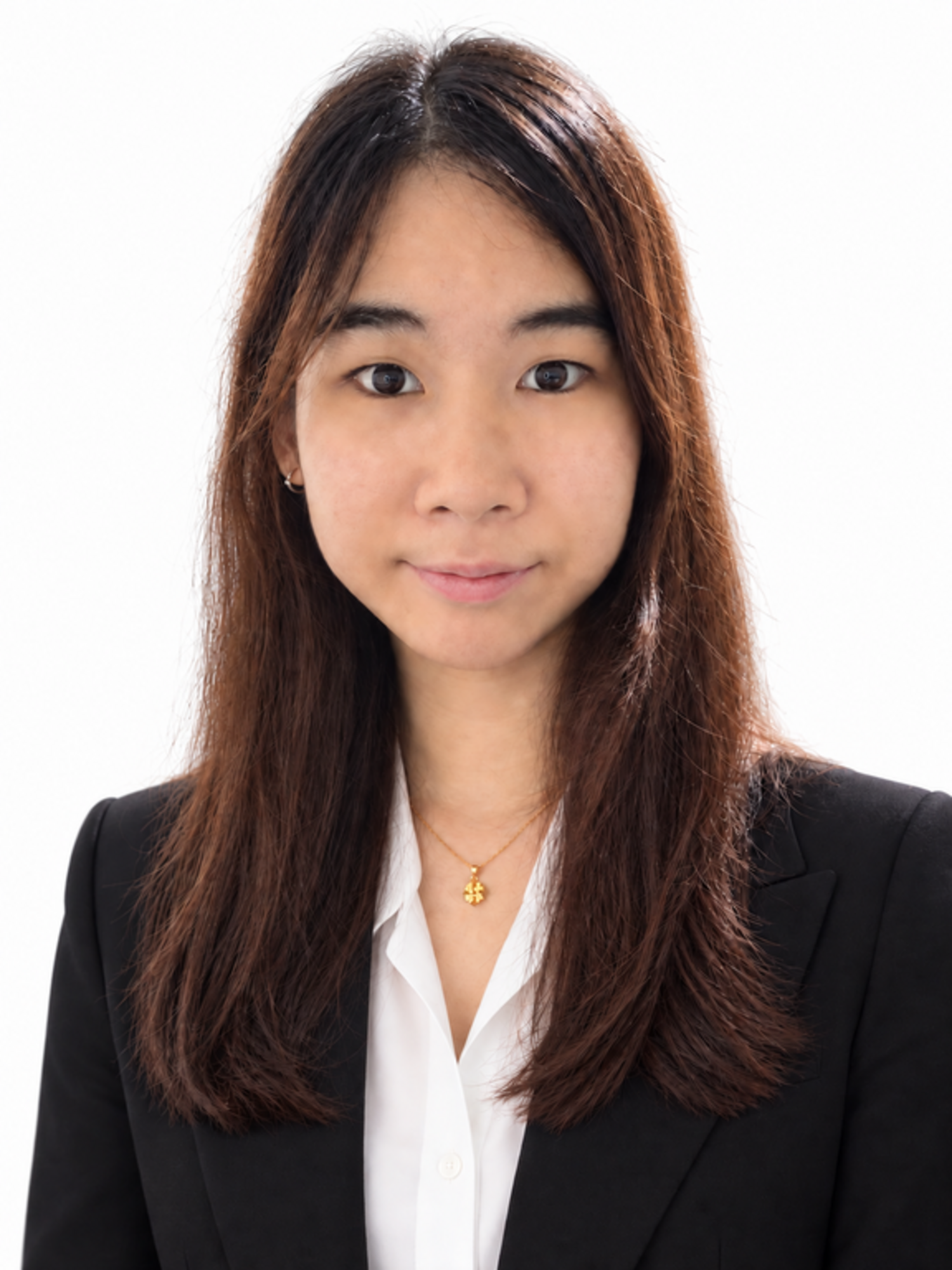
Pooi Ling Koo
PhD Candidate at Nanyang Technological University (NTU), Singapore
Pooi Ling Koo is a PhD candidate in Civil and Environmental Engineering (CEE) and Singapore Membrane Technology Centre (SMTC), Nanyang Environmental & Water Research Institute (NEWRI), Nanyang Technological University (NTU), Singapore. With a background in chemistry and environmental engineering, her research focuses on developing safer, more sustainable and resource efficient seawater desalination systems.
Water scarcity is an increasing global challenge and seawater reverse osmosis (SWRO) has become an important technology for securing alternative freshwater supplies. However, desalination faces several interconnected challenges, including membrane degradation, biofouling, chemical consumption, disinfection by-product formation and generation of concentrated brine. Pooi Ling’s research seeks to address these challenges by rethinking the pretreatment, process and the post-treatment of seawater desalination.
A central focus of her doctoral research is bromide control. Bromide occurs naturally in seawater and can participate in reactions during disinfection that lead to brominated disinfection by-products. She investigates selective oxidation, removal and recovery strategies for bromide while minimising the interference from other ions, especially chloride in seawater. Her research also extends beyond freshwater production to valorisation of desalination brine. Rather than viewing concentrated brine solely as a waste stream, she investigates integrated membrane and electrochemical processes for recovering and converting resources from brine into valuable resources. This circular approach aims to reduce waste while improving the resource efficiency of desalination.
Looking forward, Pooi Ling is particularly interested in connecting experimental water treatment research with digitalisation. Membrane systems generate extensive operational and water-quality data for real-time decision making. She aims to explore how data-driven modelling, predictive monitoring and digital optimisation can help identify sustainable operating windows that balance water production, membrane integrity, biofouling control, chemical consumption and environmental impact.
Through this integration of water chemistry, membrane technology, resource recovery and digital approaches, her long-term goal is to contribute to a new generation of desalination systems that are safer, smarter and more circular.